 020 3793 7323



Are Solar Batteries worth it in the UK? Costs, Savings & Payback
For many UK households, yes a home battery can be worth it, especially if you’re out in the day and use more electricity in the evening, or you’re on time-of-use tariffs. Typical installed costs for around 5 kWh sit near £4,600, with a broad range depending on capacity and brand. Bundling storage with a new PV system often reduces overall install cost; stand-alone batteries also benefit from 0% VAT in Great Britain until 31 March 2027. Your payback depends on how much evening demand you can shift and the tariffs you choose
Who is this guide for?
UK homeowners considering solar Panels uk who want to understand if a battery is worth adding now or later. We’re Evergreen Power UK, installing solar PV and batteries for homeowners since 2013. The advice below distils what we tell customers at survey, minus the jargon.
What do solar batteries cost in 2025?
- The Energy Saving Trust cites an indicative range of £1,500–£10,000 for domestic Solar battery storage, with ~£4,600 as a useful benchmark for ~5 kWh systems. Costs vary by capacity, brand, and installation scenario.
- EST’s 2025 Solar Roadmap reiterates the same ~£4,600 marker for 5 kWh.
- You’ll often pay less per kWh when you install a battery at the same time as PV, because scaffolding, AC/DC works and commissioning are already in motion.
Policy boost: In Great Britain, 0% VAT applies to the supply and installation of qualifying energy-saving materials (including electrical storage batteries) until 31 March 2027. Stand-alone batteries were added from 1 February 2024; Northern Ireland follows different rules
Where the savings come from (with and without PV)
1) Self-consumption of your solar
Without a battery, a daytime-empty house exports much of its generation. A battery stores the surplus to run your evening loads cooking, TV, laundry, showers, home office reducing pricey imports.
2) Time-of-Use (ToU) arbitrage
Some households charge their battery off-peak (cheap import rate) and use that stored energy during peak periods. You need a compatible tariff and sensible automation to make this worthwhile.
3) Smart Export Guarantee (SEG)
You’re paid for metered exports under SEG. With a battery you may export less (because you self-consume more), but can still earn on bright days or when the battery is full. Selecting the right export tariff (fixed vs dynamic) matters.
Will a battery pay back? A practical framework
There’s no one-size-fits-all answer, but the following rules of thumb help:
- Evening-heavy usage = better economics. Families that cook, wash and relax 5–10pm cut the most peak imports.
- Bigger isn’t always better. If your PV rarely has surplus, a huge battery sits under-utilised. Right-size capacity to typical evening use and daytime surplus on bright days.
- Tariffs make or break it. Time-of-use import rates and a fair export deal can materially shorten payback. (We’ll help you compare options.)
Warranties, lifespan & Maintenance
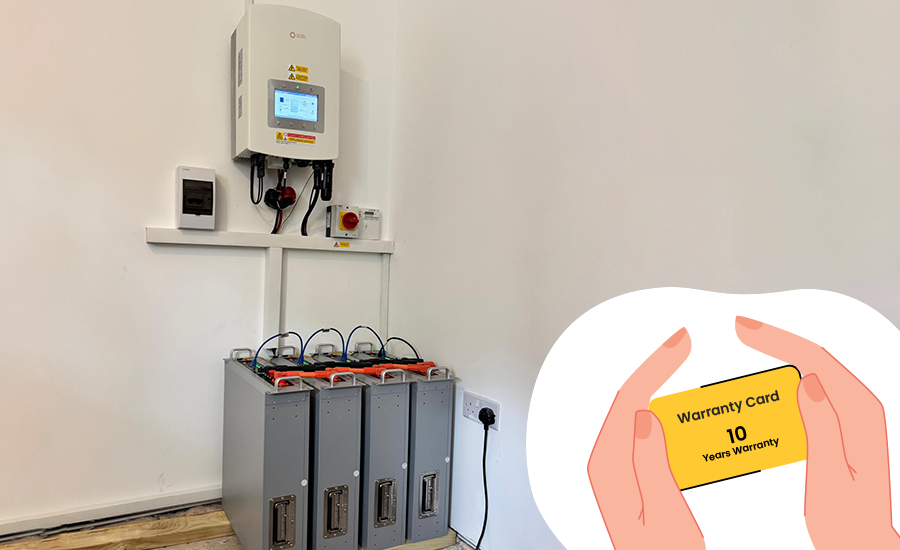
Most home batteries carry around 10-year or throughput-based warranties. Expect occasional firmware updates via the app. Good design is as important as the badge on the box: appropriate inverter pairing, sensible siting (ventilated, dry space), and tidy wiring make a big difference over the long run.
What to look for in a specification
- Capacity (kWh) vs your usage: Align with typical evening demand; don’t oversize just in case.
- Inverter choice:
- Hybrid inverter if installing with new PV — neat, efficient, fewer boxes.
- AC-coupled (separate) inverter for retrofits — flexible with existing arrays.
- Cycle/throughput warranty: Check usable capacity, warrantied cycles.
- Monitoring & control: A clear app to schedule charge/discharge with ToU tariffs.
- Safety & placement: Follow manufacturer clearances; avoid damp spaces; ensure adequate airflow.
About Evergreen Power UK
Established in 2013, Evergreen Power UK designs and installs solar PV and home batteries for households across England, Scotland and Wales. Our in-house project advisors and engineers tailor each system to your roof and routines, then handle DNO paperwork, MCS certification, neat installation, monitoring set-up and aftercare. We’re MCS, NAPIT, EPVS and HIES accredited, and we back our workmanship with clear warranties and friendly support long after switch-on.
FAQs
1) Do I lose SEG if I add a battery?
No. SEG pays for metered export regardless; you’ll likely export less because you self-consume more. Check each supplier’s terms.
2) What size battery should I choose?
Roughly match capacity to your evening consumption and typical daytime surplus. We’ll model this from your bills and roof design during the survey.
3) Can I add a battery to existing panels?
Yes, and in Great Britain stand-alone batteries qualify for 0% VAT on supply and installation.
Ready to see if a battery stacks up for your home? Book a free technical survey. We’ll model your evening demand, check your roof and electrics and give you a clear quote.
Written by: Kyler Walter

- Kyler Walter is a passionate advocate for renewable energy and sustainable living. As a leading voice at Evergreen Power UK, he specializes in solar energy solutions and has played a vital role in promoting innovative, eco-conscious technologies across the UK.
Latest entries
 SolarJanuary 19, 2026Are Solar Panels Worth It in the UK in 2026?
 Solar BatteriesJanuary 9, 2026Why Combine Solar PV with Home Battery Storage? Practical benefits for UK homeowners
 Solar BatteriesDecember 4, 2025Are solar batteries worth it in the UK? Costs, savings & payback
  SolarNovember 6, 2025Do solar panels work in winter in the UK? What to expect
