 020 3793 7323



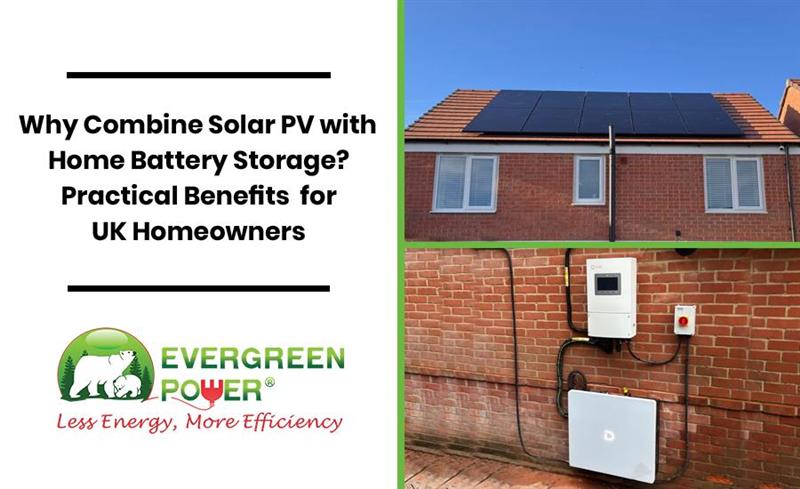
Why Combine Solar PV with Home Battery Storage
Summary
Solar and battery storage work brilliantly together for many UK homes—especially if evenings are your peak usage or you’re on a time-of-use tariff. The best next step is simple: a short home survey, a tailored design, and clear options.
If you’re weighing up solar and battery storage, here’s the gist: solar PV makes electricity when the sun’s out; a home battery stores the excess so you can use it later. For many UK households, “solar and battery storage” together means higher self-consumption, lower exposure to peak prices and a more resilient setup. Whether it’s worth it depends on your routine, tariff and roof
How the Combo works day to day
Solar first, storage second
Your panels generate power. The home uses it immediately. Anything spare charges the battery. When the sun fades, the battery discharges to keep appliances running. It all happens automatically in the background.
Using more of what you Generate
Without storage, surplus energy is exported. With storage, more of it powers your evening life—cooking, telly, showers, even a quick tumble-dry. That shift from export to self-use is where the value builds
Time-of-use tariffs and off-peak top-ups
On a time-of-use tariff, a battery paired with solar panels UK can charge overnight at cheaper rates and help you avoid more expensive peak periods. It’s not magic; it’s smart scheduling. Batteries can be set up to work seamlessly with your daily routine
Who benefits most from a Battery?
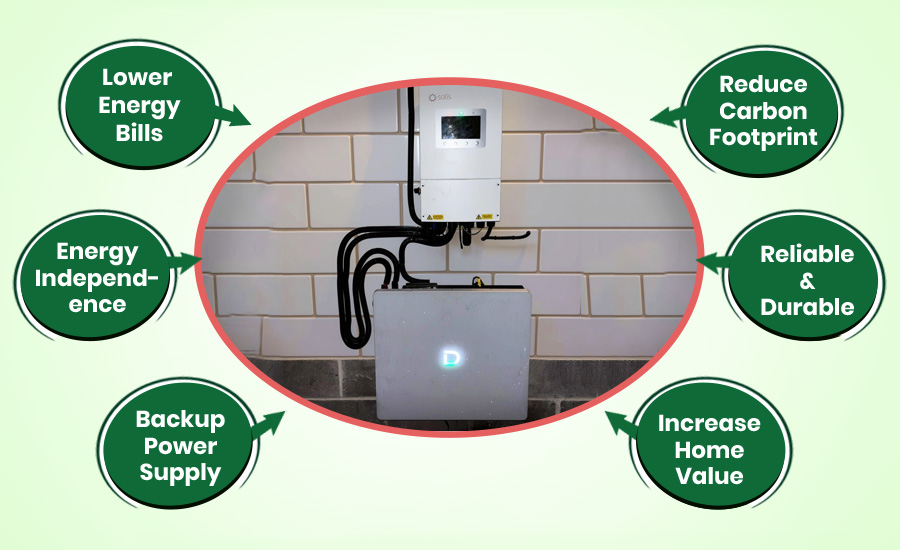
If the house is empty during the day but buzzing after 5pm, storage carries daytime solar into your evenings.
EV owners and heat-pump homes
Electric vehicles and heat pumps mean bigger electric loads. A battery helps you smooth those peaks and prioritise your own generation
Properties with occasional outages
Some battery systems can be designed for backup-style operation. This requires specific hardware and circuits—ask us about what’s feasible in your home
A realistic homeowner scenario
Picture Emma and Raj in a typical semi. They both work weekdays, get home at six, and run the dishwasher at night. With solar alone, their panels export a lot at lunchtime. Add a battery and that midday surplus now covers the evening lights, the kids’ homework laptops and a quick dinner. Their grid imports shrink in the expensive hours. No spreadsheets needed to see the difference—just a glance at the app.
Installation and design points that matter
AC-coupled vs DC-coupled
AC-coupled batteries are excellent for retrofits; DC-coupled suits many new installs. We’ll explain the trade-offs and recommend the right path for your roof and consumer unit.
Safety, location and neat cabling
Batteries typically go in a utility room, garage or plant space, following manufacturer guidance on ventilation and clearances. We plan cable routes to be tidy and discreet
Monitoring and control
You’ll get an app to track charge/discharge, set schedules and update preferences seasonally
Costs and expectations (without the hype)
A battery adds cost, so the case needs to be clear. We’ll model your usage and tariff, then share a proposal.
How Evergreen Power Helps
We’ve spent 13 years helping UK households upgrade their homes, and our polar-bear mascot is a friendly reminder to keep things efficient and planet-kind. We design solar PV and home battery storage as a joined-up system, handle the electrics neatly, and get you set up with monitoring. If you prefer to phase the project, we’ll make your solar battery ready from day one
Ready to explore solar with home battery storage? To get advice and a bespoke quote now contact us today
FAQ’s
Do I need solar PV to install a battery?
You can install a battery without solar and charge off-peak, but pairing with panels usually delivers the most benefit for UK households
Will a battery keep the lights on in a power cut?
Only if the system is designed for backup with compatible hardware and circuits. We’ll explain the options and what they can power safely
Can I add a battery later to my existing solar?
Yes. Many systems support AC-coupled retrofits. Ask us to check compatibility and design a tidy cable route.
Where does a battery usually go?
Common locations include a utility room, garage or plant area, following manufacturer guidance on clearances and ventilation
How much maintenance is involved?
Very little. Keep the area clear, follow app prompts for updates and contact us if you see repeated alerts
Written by: Kyler Walter

- Kyler Walter is a passionate advocate for renewable energy and sustainable living. As a leading voice at Evergreen Power UK, he specializes in solar energy solutions and has played a vital role in promoting innovative, eco-conscious technologies across the UK.
Latest entries
 Air ConditioningMarch 26, 2026Is Air Conditioning Worth It in the UK? The Honest Homeowner’s Guide
 SolarJanuary 19, 2026Are Solar Panels Worth It in the UK in 2026?
 Solar BatteriesJanuary 9, 2026Why Combine Solar PV with Home Battery Storage? Practical benefits for UK homeowners
 Solar BatteriesDecember 4, 2025Are solar batteries worth it in the UK? Costs, savings & payback
